Publish your documents
Publish Google Docs, Word, Markdown or text to WordPress or Blogger. Send one article or a batch without copying each into your site.
Tenwrite features
Publish Google Docs, Word, Markdown and text files. Manage posts across sites and track Google Search results. Use AI assistance and automation for repeat publishing work.
Sign in with Google or an email link. Use the web dashboard or publish from the Google Docs add-on.
Feature overview
Publish an article, find it again, send updates, and review search performance. Automate the steps you repeat.
Publish Google Docs, Word, Markdown or text to WordPress or Blogger. Send one article or a batch without copying each into your site.
Find articles across your sites or client sites. Check drafts and scheduled posts, edit details, and update articles without starting a new post.
See search views, clicks and changes in search position. Compare results to choose which articles to improve next.
Publish new articles and updates from Google Drive folders or Google Sheets on a regular schedule. Spend less time repeating the same steps.


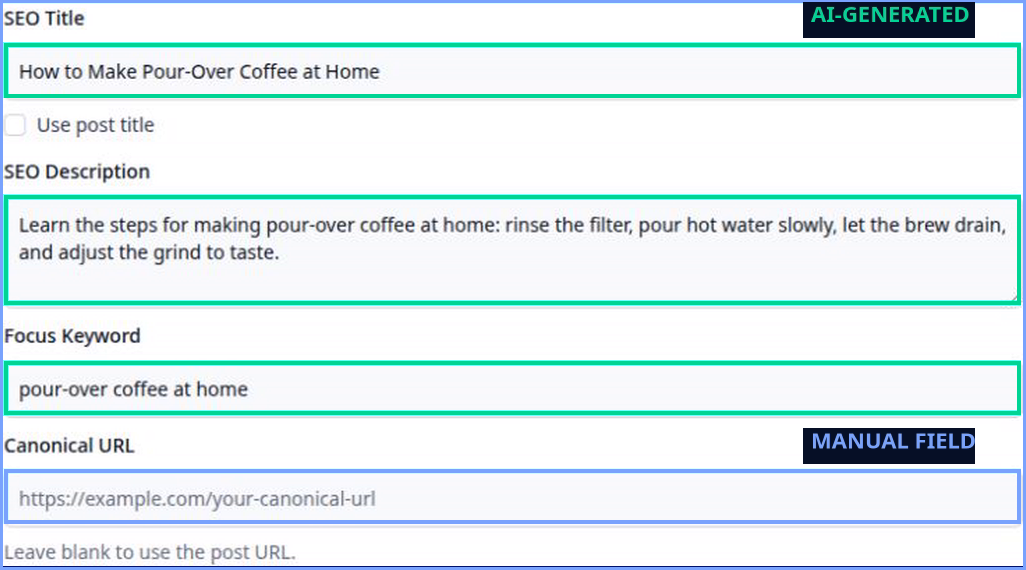
Generate titles, meta descriptions, and focus keywords for self-hosted WordPress. The Tenwrite plugin sends supported fields to Yoast SEO or Rank Math.
Suggest WordPress categories and tags or Blogger labels. Use existing terms, or allow new ones in each site's AI Settings.
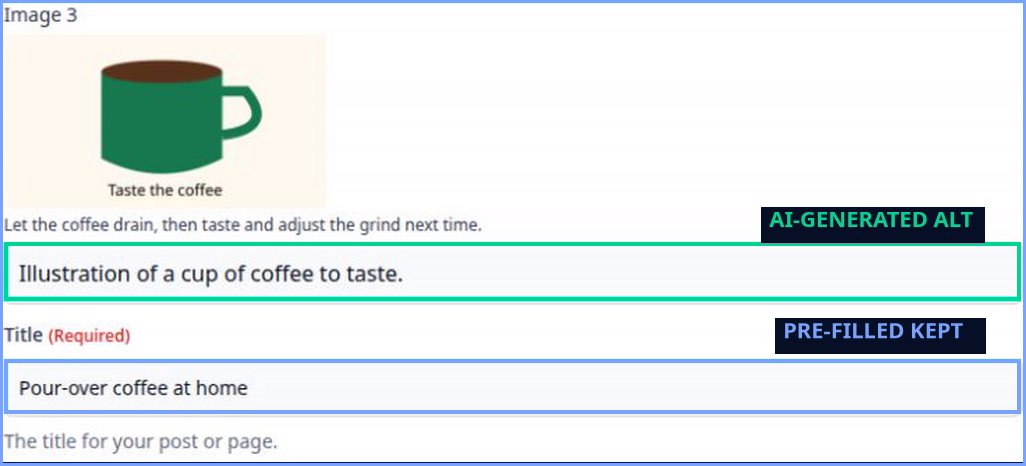
Generate alt text for WordPress or Blogger images. Review and edit each description before export.
Use AI in automations too. Choose which fields Drive and Sheets automations generate. Keep your own values for the rest.
Included monthly credits. Pro includes 30 credits; Agency includes 75 shared credits.
Publishing and file uploads
Keep writing in the tools you know. Select Google Docs or upload files from your device, choose a connected site, and review the export. You can keep working copies as drafts or schedule finished articles ahead.
Choose a Google Doc or upload a Word (.docx), Markdown or text file. Select your site, review the post details, and confirm when you are ready.
Upload several files and add Google Docs or Word files from Drive to the same export. Review the batch together instead of starting over for each source.
For a linked Google Doc, edit the document and use Sync Post. For an uploaded file, upload a revised version to the existing post and review the update.
Formatting and embeds
Keep supported headings, lists, links, tables, bold text and italics from Google Docs and Word. Markdown uses its own formatting, while TXT stays plain text. Choose cleanup settings to remove unwanted styles and spacing before publishing.
Start with the recommended Balanced settings, or choose what to keep and remove. You do not need to edit website code to tidy an article.
Remove unwanted text styles, empty lines and extra spacing. Keep useful structure such as headings, nested lists, links, tables, bold text and italics.
Turn supported YouTube and X/Twitter links into embedded content. YouTube players fit the article column and resize for smaller screens without a theme change.
Preserve animated GIFs from source documents on supported paid plans.

Images and media
Article images move to WordPress's Media Library or Tenwrite's hosted delivery for Blogger. Use AI to suggest image descriptions for screen readers, then check them before publishing.
Images included in supported documents are uploaded to your WordPress Media Library and placed in the article. You can also choose a featured image before publishing.
Tenwrite hosts images from supported documents so they appear in the published Blogger article. Your readers do not need access to the original Google Doc or uploaded file.
Publishing details and SEO metadata
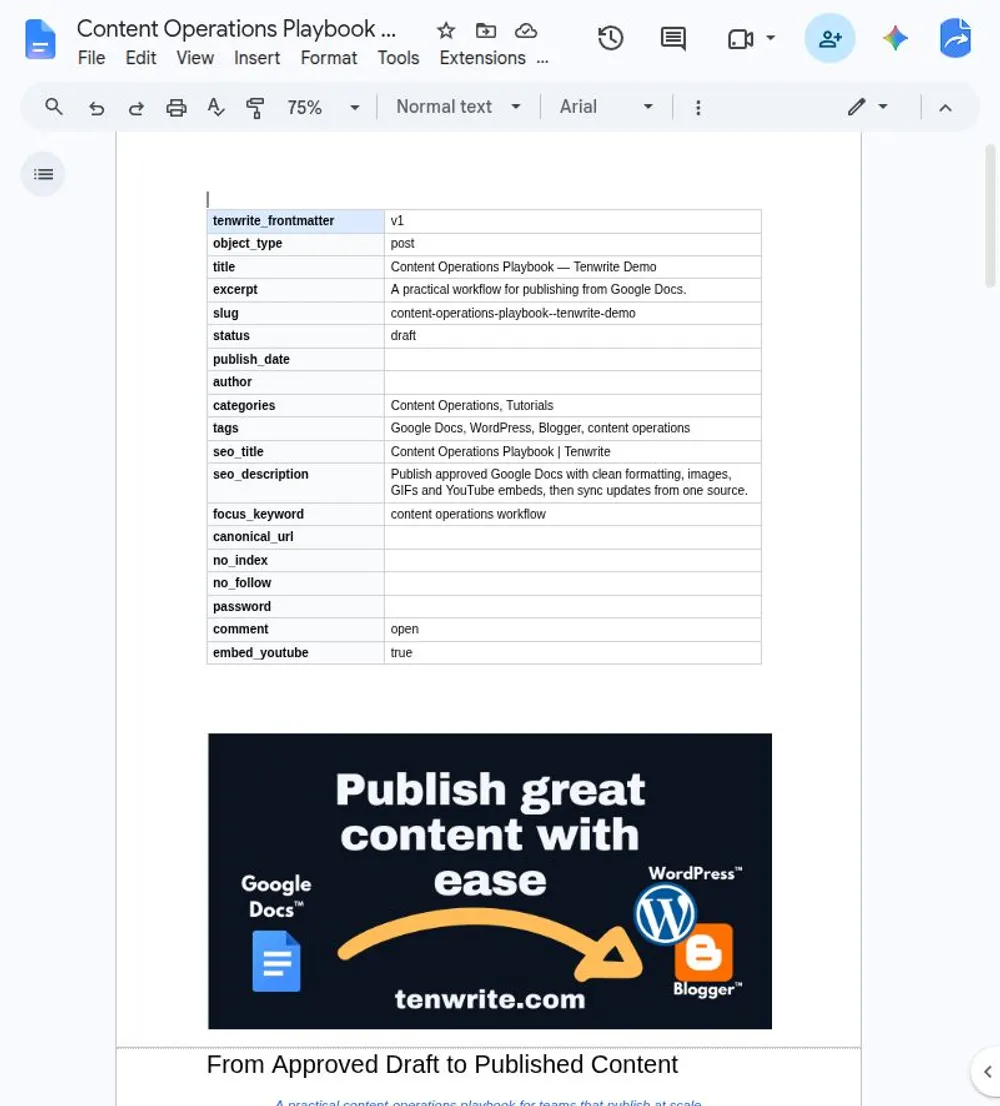
Set post details in Tenwrite or your Google Doc's frontmatter table. Document settings take priority. Check the confirmation to see whether each article will stay a draft, publish now, or be scheduled.
Set the title, web address, short description, categories, tags or Blogger labels. Choose the publication status and check the details before sending the article to your site.
Frontmatter is a small settings table at the top of a Google Doc. Use Tenwrite's editor to set post details without remembering field names or editing the table by hand.
Choose a future date and check the outcome before Export or Sync. Scheduling uses your saved Tenwrite timezone. An explicit Keep as draft choice stays a draft, even with a future date.
Set a search title, description, focus keyword and other supported SEO settings in the document or export form. On self-hosted WordPress, the Tenwrite plugin connects these fields to Yoast SEO or Rank Math.
Drive and Sheets automation
Tenwrite checks connected folders and spreadsheets on an hourly schedule, then publishes new content or sends updates. Choose the publication status and settings for the content you want to process.
Watch a Drive folder and automatically process new or updated Google Docs into WordPress or Blogger posts.
Plan publishing in a Google Sheet. Each row sets the document, destination site and post details, so your team can see the publishing plan in one place.
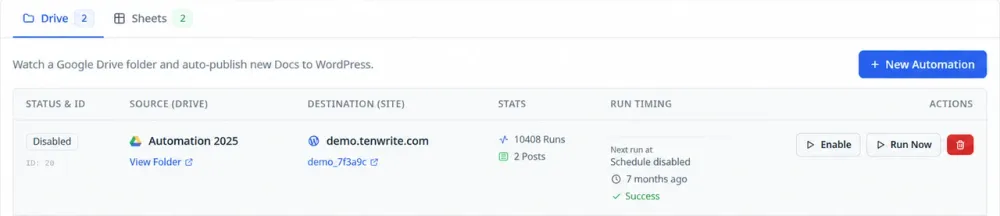
Drive and Sheets automation are included on Pro and Agency. See pricing and automation limits.
Content Index
Bring posts and pages from connected WordPress sites and Blogger blogs into one dashboard, including articles published outside Tenwrite. Find and manage existing content alongside new work.
Search and filter posts and pages across connected sites, including articles published directly in WordPress or Blogger.
Change supported titles, web addresses, publication status, categories, tags and labels without opening every site's dashboard. Details controlled by document frontmatter stay protected from conflicting edits.
Move content between draft and published states from Tenwrite where supported.
Sync Site Content brings your site's latest posts into Tenwrite for browsing and search. It does not rewrite those posts. Sync Post is the separate action that sends document changes to your site.
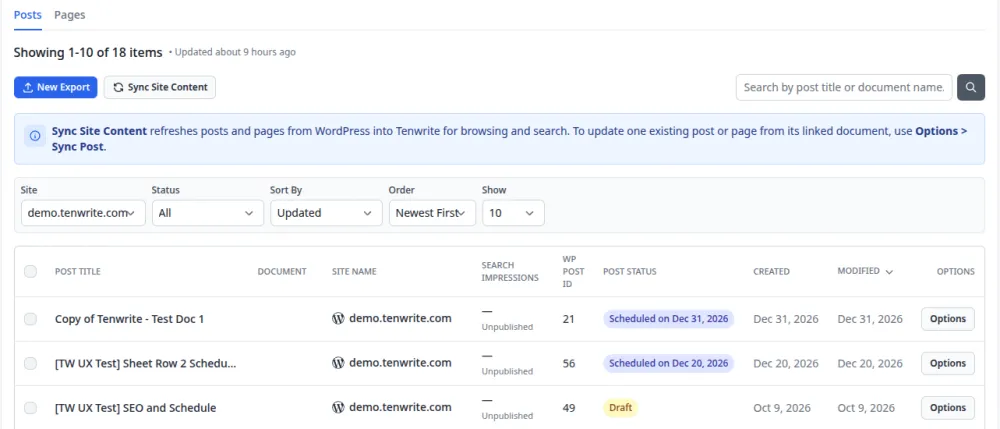
Available on all plans, with content sync limits based on your plan. The Content Index is your content list in Tenwrite; it does not submit pages to Google's index.
Learn how to manage posts in the Content IndexSEO Tracker
Connect Google Search Console for a WordPress site or Blogger blog. Review search performance for the published posts and pages Tenwrite has loaded, including content published outside Tenwrite.
SEO Tracker is included in every paid plan. The site owner connects Search Console and manages refreshes; invited site members can view the tracker. Finalized search data updates daily with a three-day delay. It is not live traffic data.
Learn how to connect Search Console and use SEO Tracker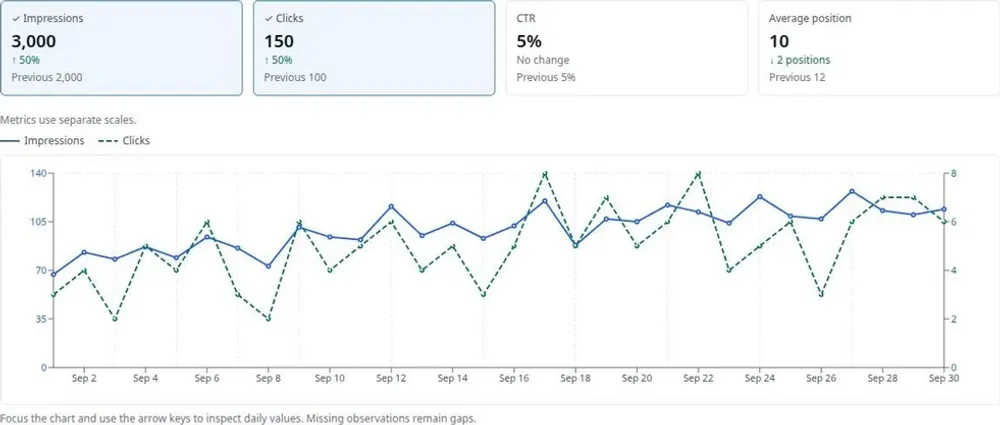
WordPress and Blogger
The writing workflow stays the same, while Tenwrite handles the platform-specific publishing details.
Turn Google Docs and supported uploaded files into WordPress posts or pages. Keep useful formatting, move article images into your Media Library, and update the same post later.
Publish Google Docs, Word, Markdown and text files as Blogger posts. Set labels, schedule publication and choose comment settings before exporting.
Teams and agencies
Agency includes unlimited connected sites and exports, automation, SEO Tracker, and five total seats. Teammates use their own Tenwrite accounts with access to the subscription's plan limits.
Agency includes one owner and four teammates. Each person signs in with their own Tenwrite account.
Teammates use the Agency subscription's plan limits and can connect their own sites. Subscription seats and site sharing are managed separately.
Check your export allowance and review past exports from the dashboard.
Read about managing team seats or see Tenwrite for agencies.
Plan availability
| Feature | Free | Starter | Pro | Agency |
|---|---|---|---|---|
| WordPress plugin & SEO metadata | ||||
| AI publishing credits | — | — | 30/month | 75/month, shared |
| SEO Tracker (Google Search Console) | — | |||
| Manual Google Docs export | ||||
| Connected sites | 1 site | 2 sites | 10 sites | Unlimited sites |
| Content sync depth | 100/site | 100/site | 250/site | 1,000/site |
| GIF images | — | |||
| Drive automation | — | — | ||
| Sheets automation | — | — | ||
| Total automations | — | — | 30 | 100 |
| Team seats | — | — | — | 5 included |
Feature questions
AI suggests WordPress categories and tags, Blogger labels, and image descriptions. Self-hosted WordPress also supports SEO titles, descriptions and focus keywords. Review suggestions before publishing. Pro and Agency include monthly credits. AI fills publishing details; it does not replace your article.
Publish Google Docs, Word (.docx), Markdown (.md or .markdown) and text (.txt). Mix uploaded files and Drive documents in one batch. WordPress supports posts and pages; Blogger exports create posts. PDF is not supported.
Yes. Email sign-in uses a one-time link that expires after ten minutes, with no password. Local-file publishing to WordPress needs no Drive connection. Connect Google for Docs, Drive, Sheets or Blogger. Google sign-in is also available.
DOCX: up to 25 MiB. Markdown and TXT: up to 5 MiB. Prepared uploads expire after 24 hours; published posts are unaffected. Upload a revised file for later updates. Markdown YAML frontmatter does not set publishing details—use the export form instead.
Yes. Choose which styles and spacing to clean up while keeping useful structure such as headings, lists, links and tables.
Document images go to the WordPress Media Library or Tenwrite's hosted delivery for Blogger. They appear in the published article without sharing your source document.
Yes. Use Sync Post for a linked Google Doc, or upload a revised file to an existing upload-based post. Review the outcome before confirming. Changes on your device are not sent automatically.
A Google Doc settings table for post details, with a guided editor. Filled fields override the export form and are locked there. Edit or clear them in frontmatter to change that. Normal manual exports do not require a table.
Pro and Agency include hourly Drive folder and Google Sheets automations, plus on-demand runs. Choose Draft for editorial review before publication. Local uploads are for manual exports, not these automations.
Posts and pages from connected sites, including articles published outside Tenwrite. Search, filter and manage them from the dashboard. This is your Tenwrite content list, not a submission to Google's search index.
Connect Google Search Console to compare articles over 7, 30 or 90 days. See search views, clicks, average position and click-through rate—the share of views leading to clicks. Daily data has a three-day delay. Results are not a guarantee of higher rankings.
SEO Tracker is included in every paid plan and needs Google Search Console access. Invited site members can view it; owners manage connections and refreshes. The WordPress plugin and manual SEO controls are available on all plans for supported self-hosted WordPress fields.
Yes, both are supported, along with Blogger. The Tenwrite SEO plugin is for self-hosted WordPress.
No. Writers can start on Free. Paid plans add SEO Tracker; Pro adds AI credits and automation. Agency includes unlimited sites and exports, plus five total seats for your team.
Start with a Google Doc or upload a file. Free includes publishing and the Content Index. Paid plans add SEO Tracker; Pro and Agency include AI credits and automation.
Free starts with 5 included exports and 1 connected site. SEO Tracker requires a paid plan and Google Search Console access.