
How to Connect Your WordPress Site to Tenwrite
Tenwrite connects to your WordPress site so you can publish Google Docs directly as posts or pages. We support WordPress.com hosted sites and self-hosted WordPress sites (including Bluehost, SiteGround, WP Engine, Kinsta, and any host running standard WordPress).
Before You Start
Section titled “Before You Start”Make sure you have:
- Administrator access to your WordPress site
- WordPress 5.6 or higher (self-hosted sites only)
- A Tenwrite account
Getting Started
Section titled “Getting Started”- Log in to the Tenwrite Web Dashboard.
- Go to WordPress > My Sites in the sidebar.
- Click the Connect Site button.
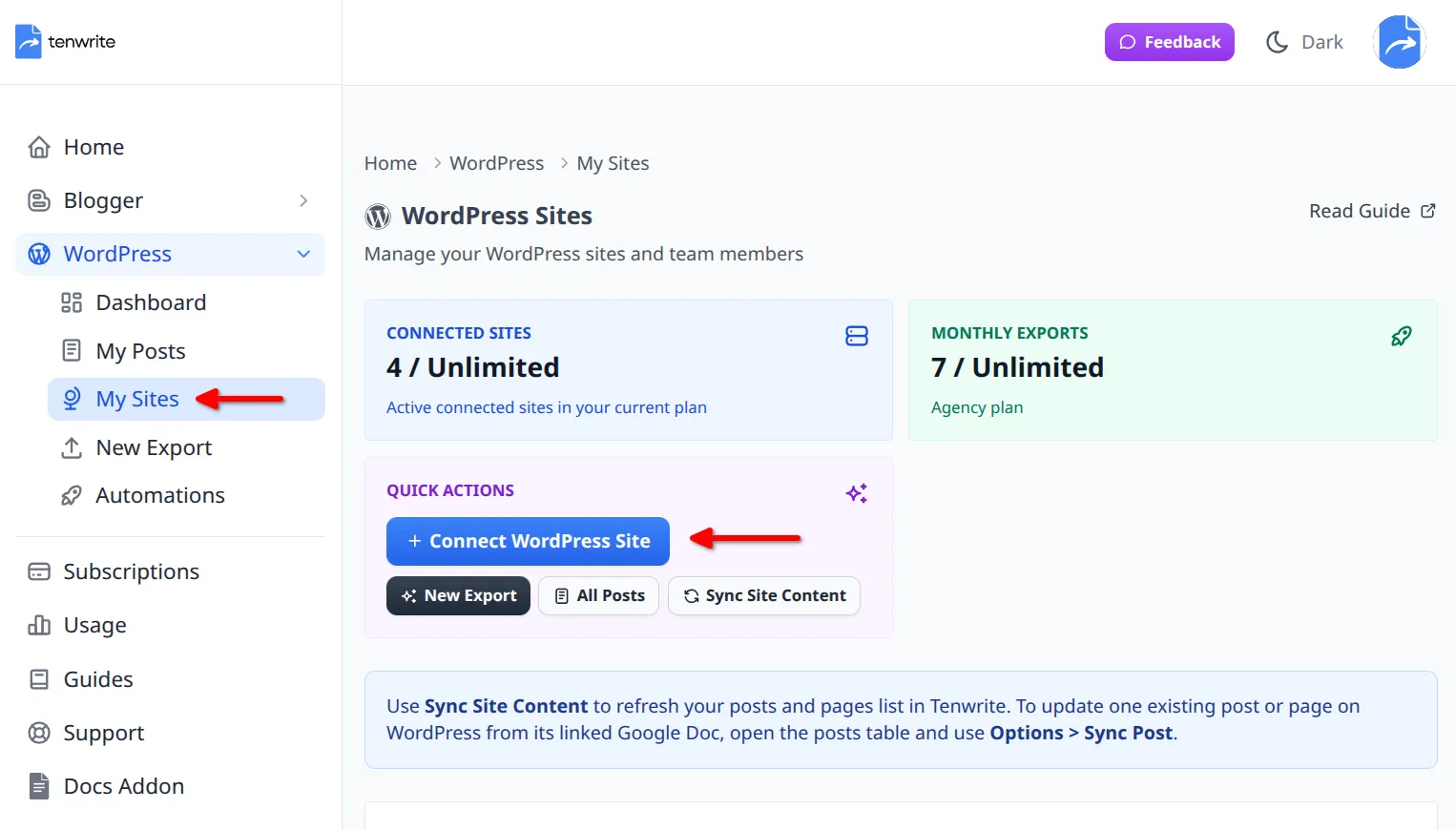
From here, choose your hosting type.
1. Connect a WordPress.com Site
Section titled “1. Connect a WordPress.com Site”If your site is hosted on WordPress.com (e.g., yoursite.wordpress.com or a custom domain on WordPress.com):
- Select WordPress.com as the Hosting Type.
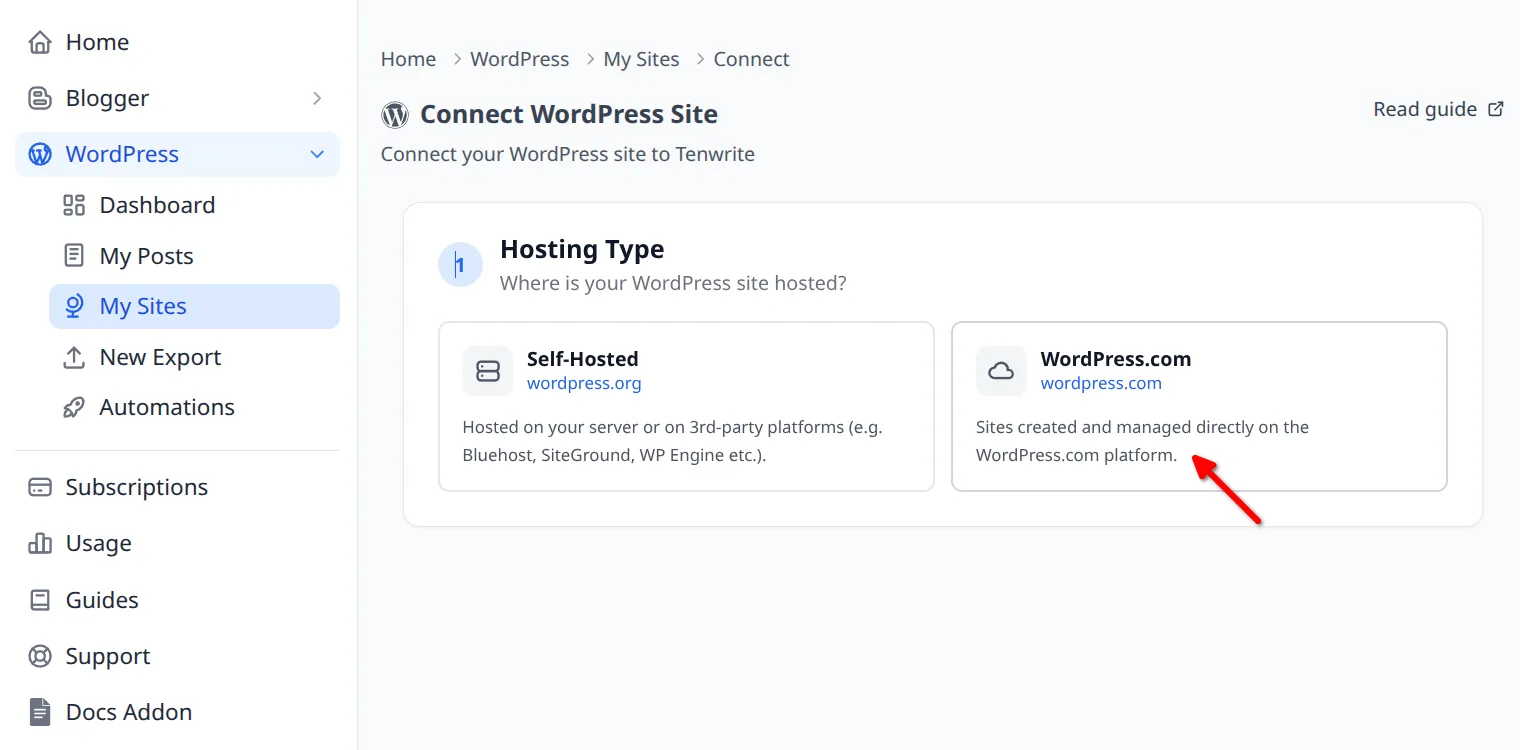
- You’ll be redirected to WordPress.com to approve the connection.
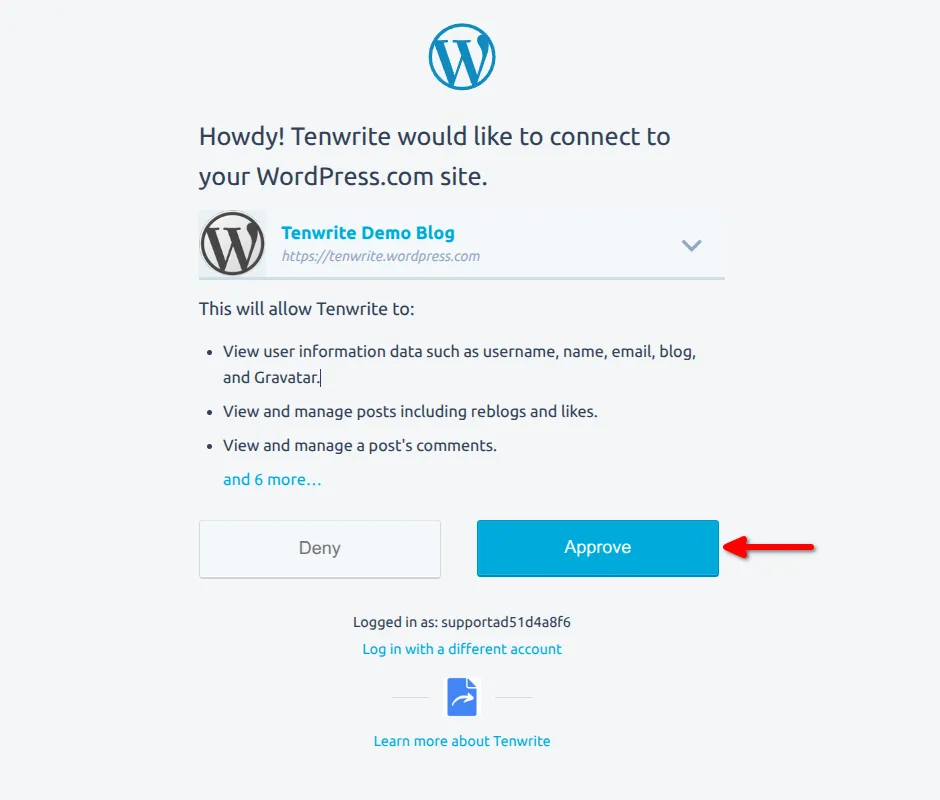
- Click to approve and grant access. You’ll be redirected back to Tenwrite automatically.
2. Connect a Self-Hosted WordPress Site
Section titled “2. Connect a Self-Hosted WordPress Site”Select Self-Hosted WordPress as your hosting type.
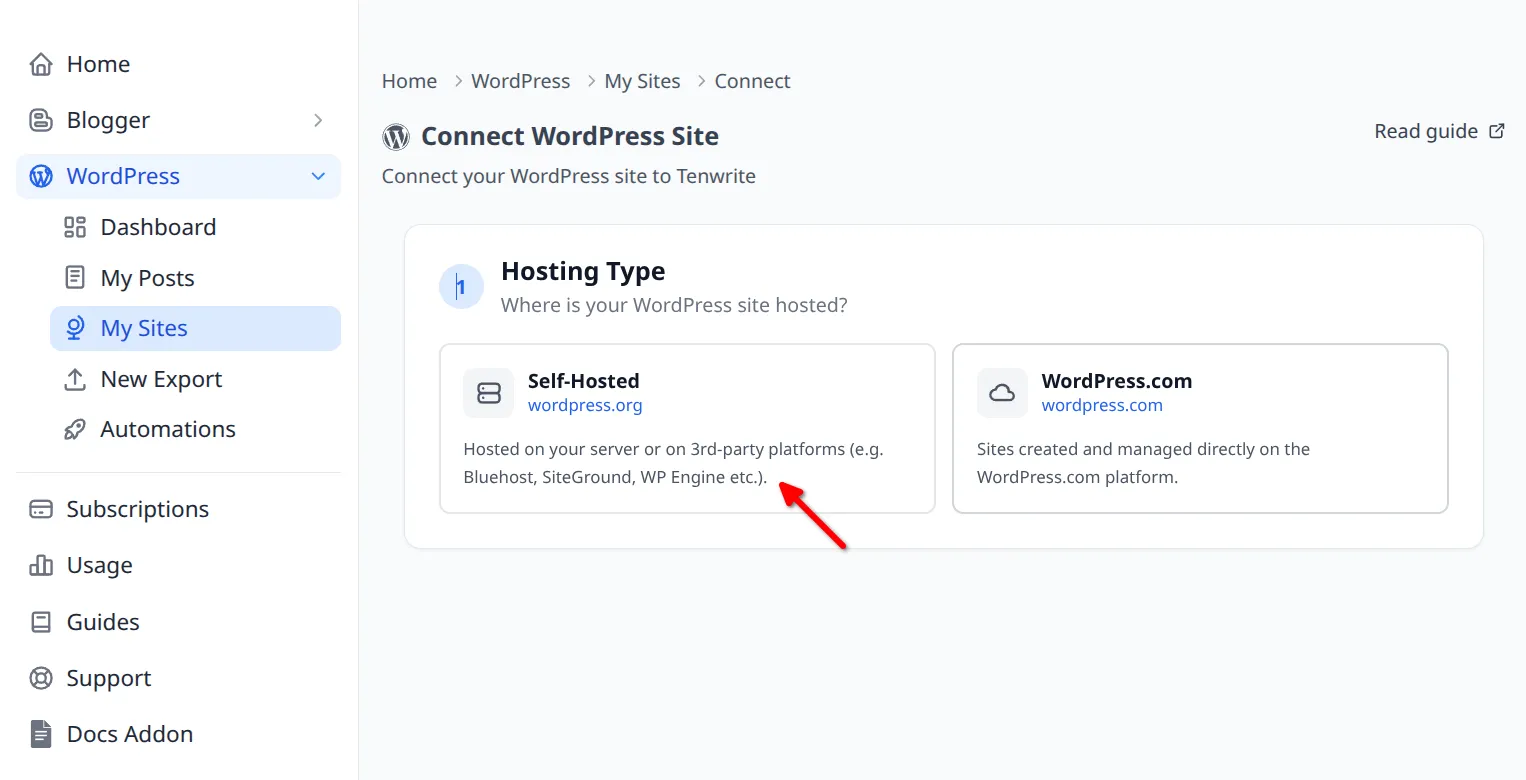
There are two connection methods. Auto Connect is recommended — use Manual Connect if security plugins on your site block the automatic flow.
Method A: Auto Connect (Recommended)
Section titled “Method A: Auto Connect (Recommended)”This is the easiest and most secure way to connect. Tenwrite will automatically request an Application Password from your WordPress site without you needing to manually create one.
- In the Auto Connect tab, enter your WordPress Site Address (e.g.,
https://mywebsite.com).
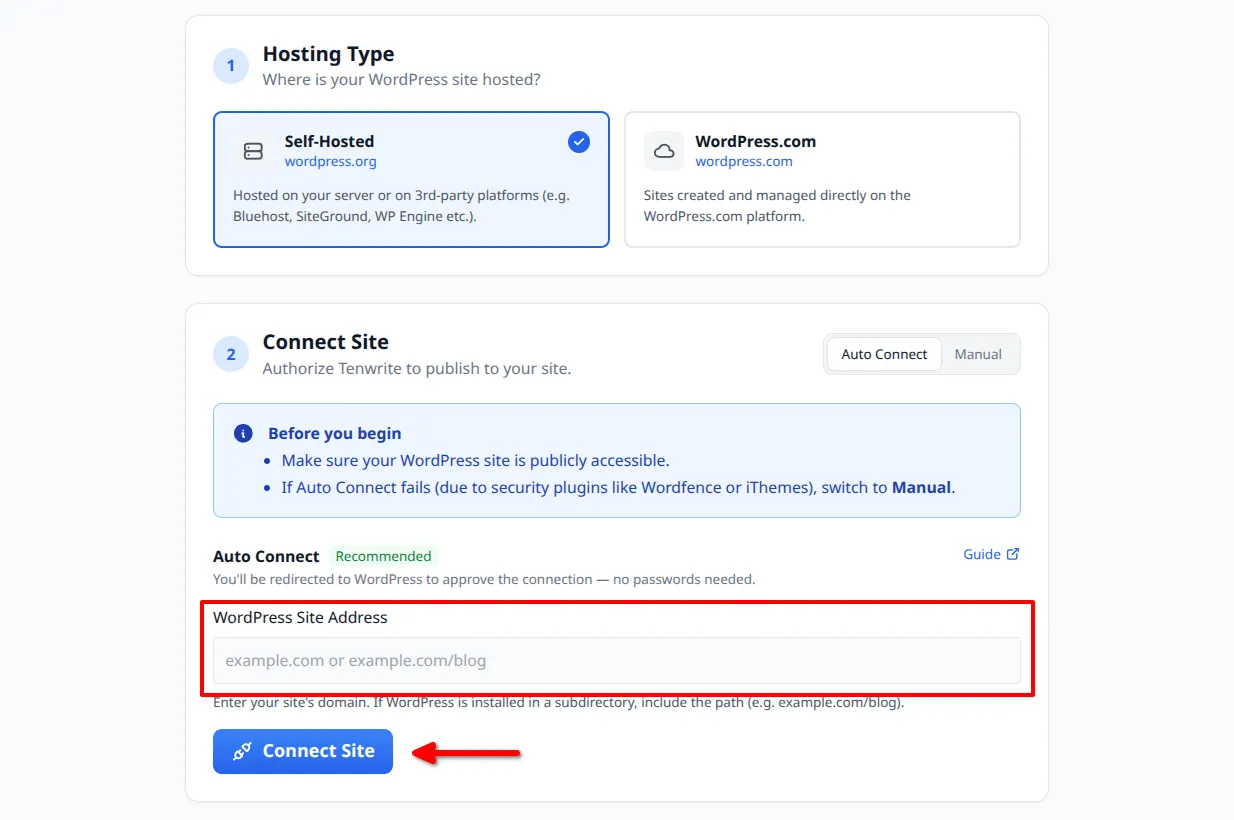
- Click Connect Site.
- You’ll be redirected to your WordPress Admin’s “Authorize Application” screen. Log in to WordPress first if prompted.
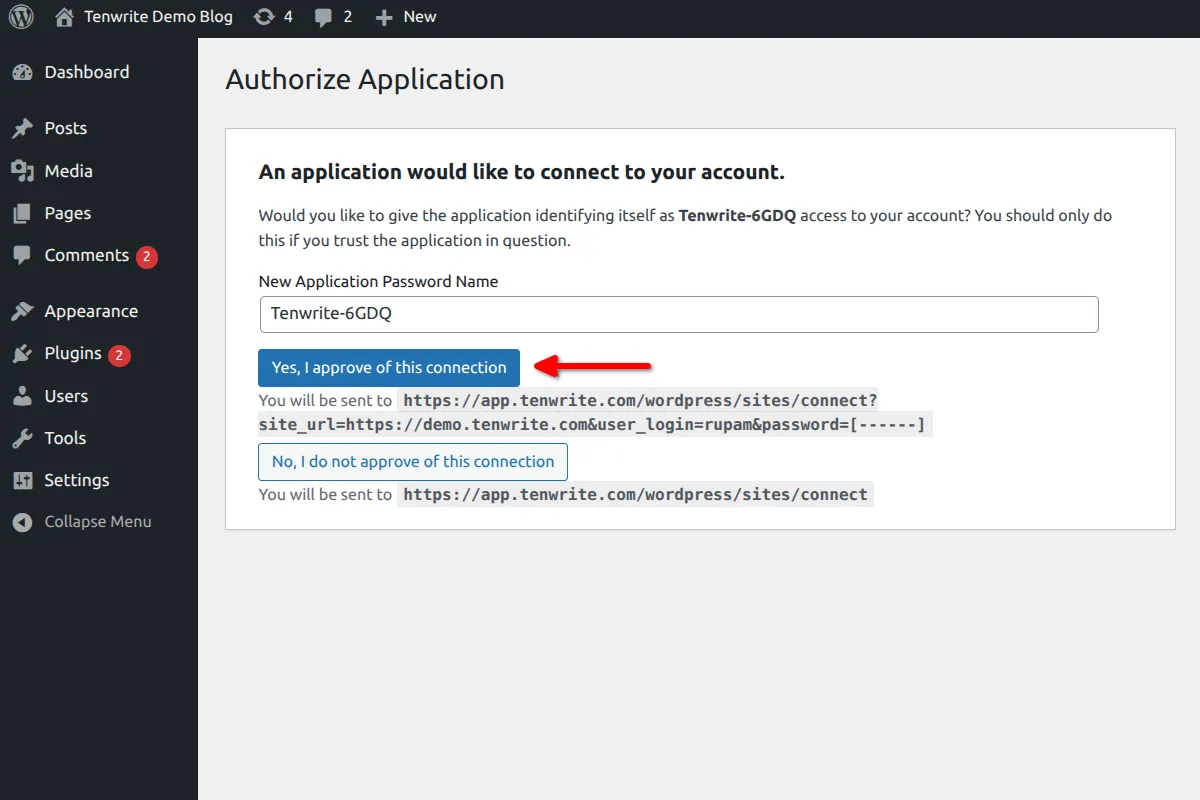
- Click Yes, I approve of this connection.
- You’ll be redirected back to Tenwrite and your site is ready to use.
Method B: Manual Connect
Section titled “Method B: Manual Connect”Use this method if Auto Connect fails or if you use security plugins like Wordfence or iThemes Security that block external application authorization.
Step 1: Generate an Application Password
Section titled “Step 1: Generate an Application Password”Application Passwords allow third-party apps like Tenwrite to securely authenticate with your WordPress site without needing your actual login password.
- Log in to your WordPress Admin Dashboard.
- Go to Users > Profile in the sidebar.
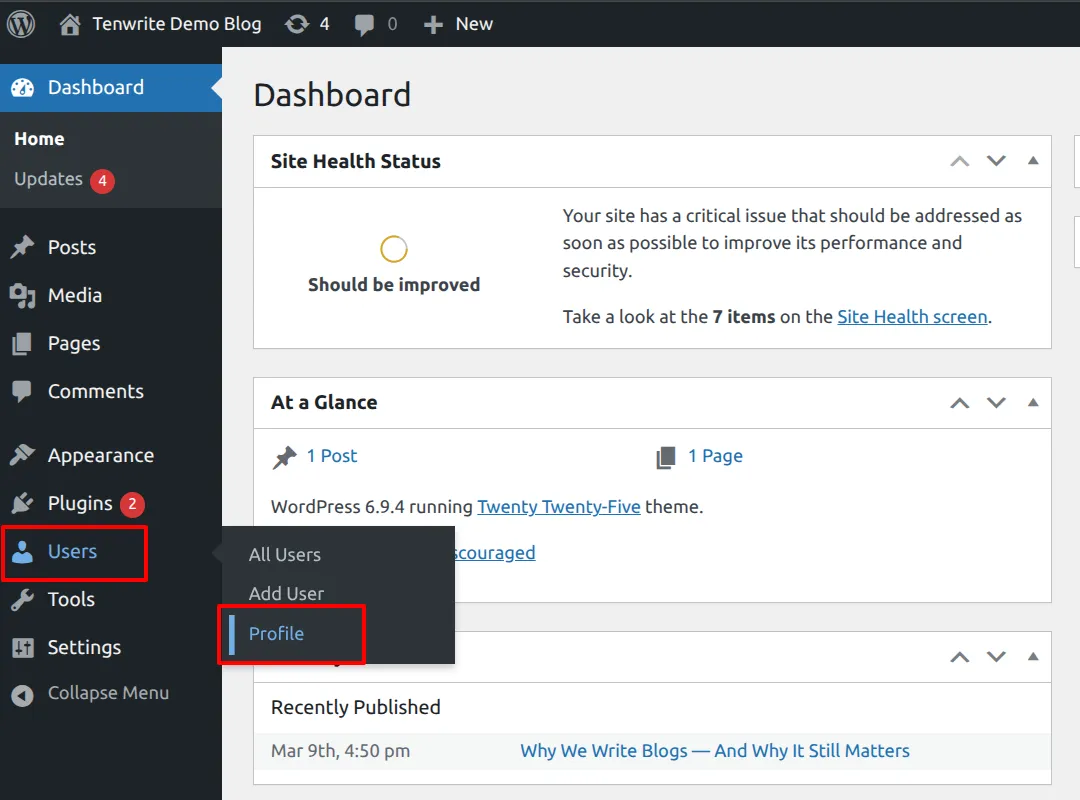
- Scroll down to the Application Passwords section.
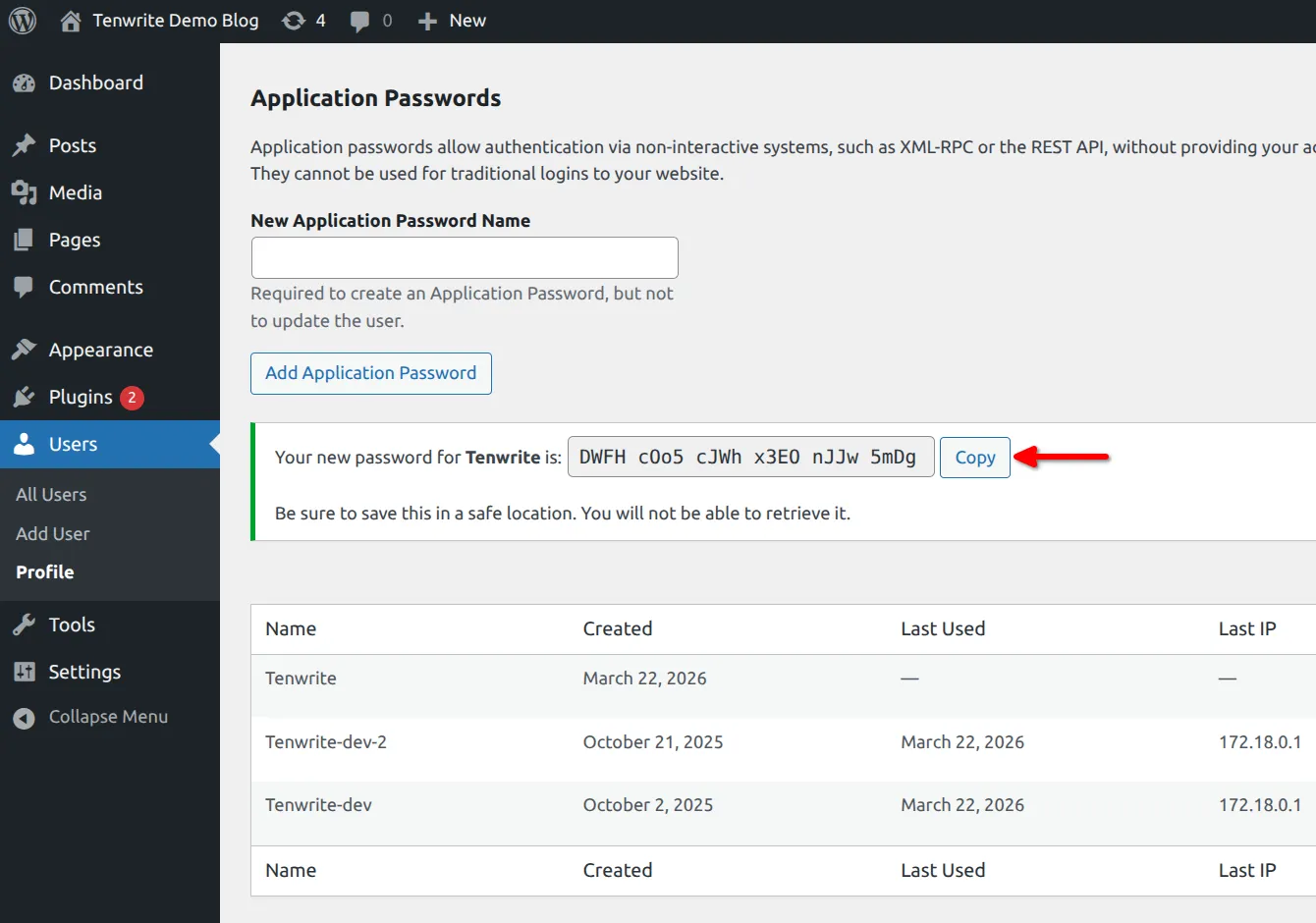
- Enter a name (e.g., “Tenwrite”) in the New Application Password Name field and click Add New Application Password.
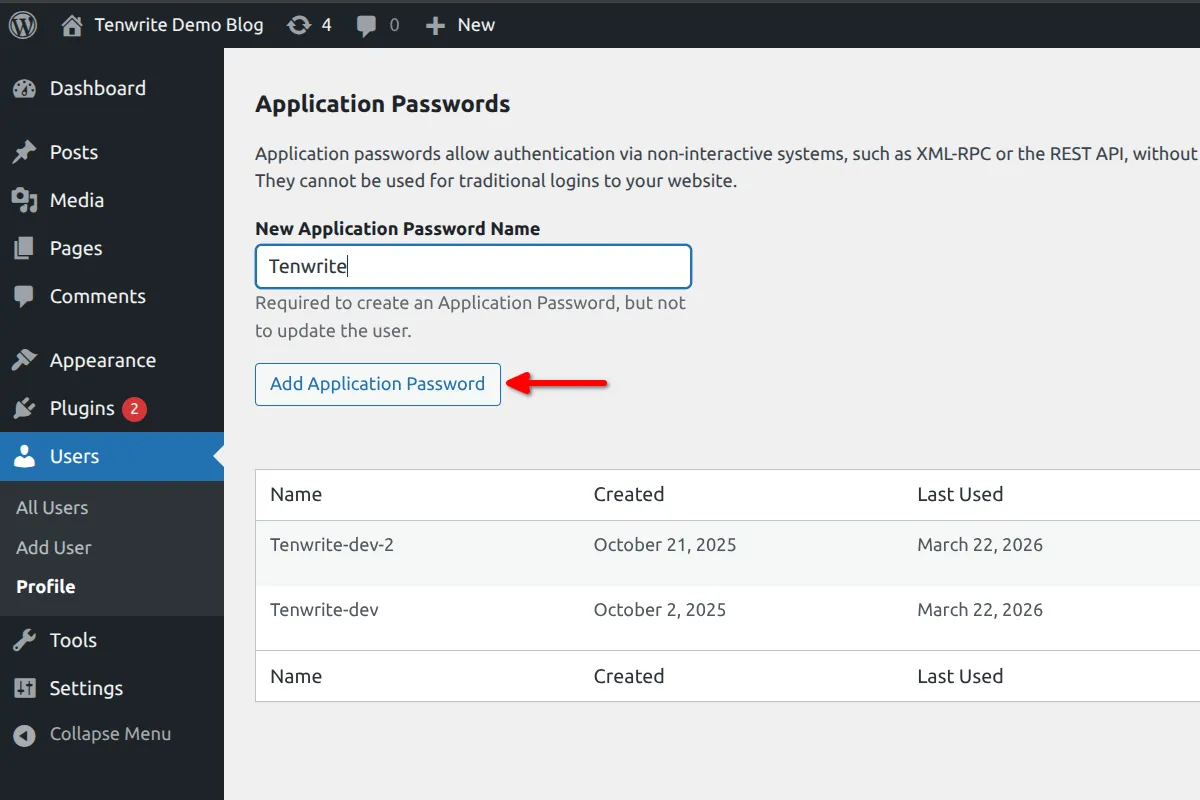
- WordPress generates a password in
xxxx xxxx xxxx xxxxformat. Copy it immediately — WordPress only shows it once.
Step 2: Find Your WordPress Username
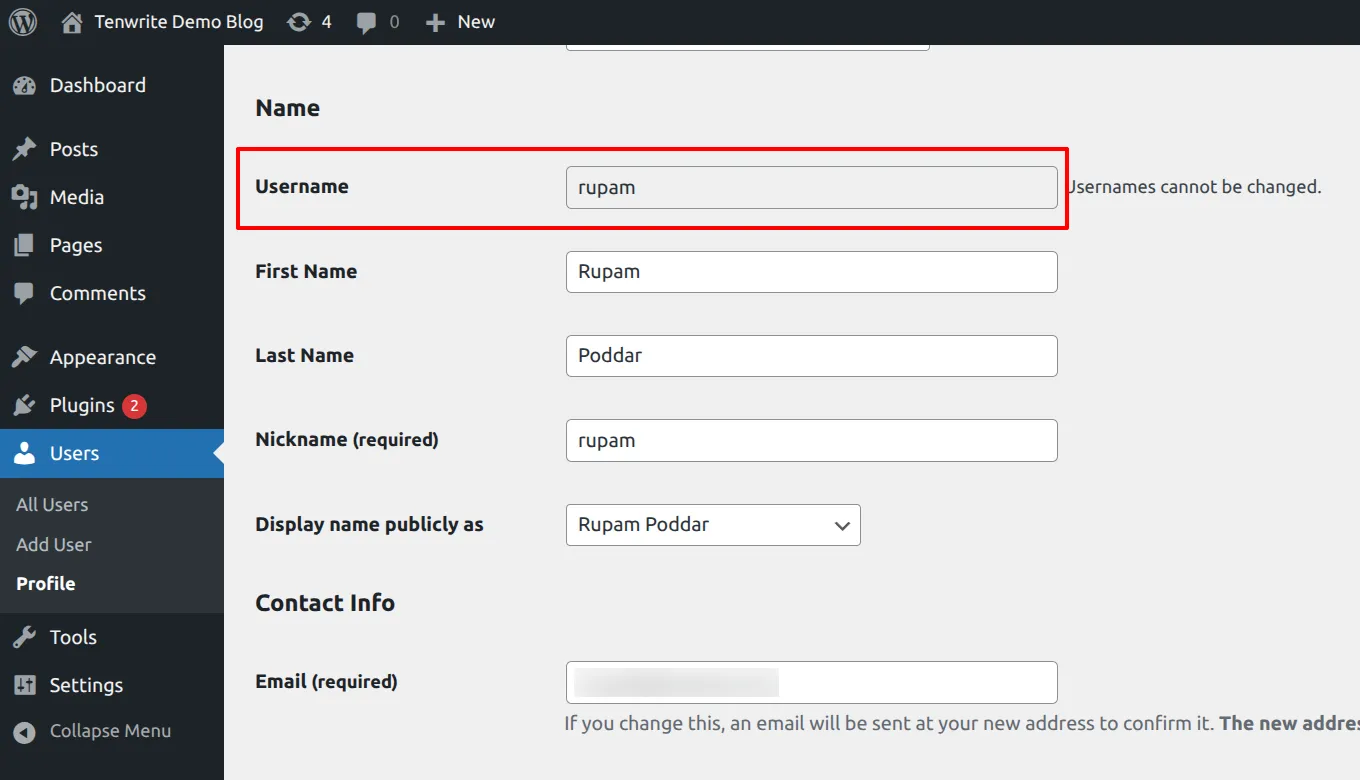
Section titled “Step 2: Find Your WordPress Username”While still on the Users > Profile page, scroll up to the Name section. Your Username is shown there — it can’t be changed, so it’s always accurate.
Step 3: Enter Details in Tenwrite
Section titled “Step 3: Enter Details in Tenwrite”- Switch back to Tenwrite and select the Manual tab.
- Enter your WordPress Site Address.
- Enter the WordPress Username you found above.
- Paste the Application Password you just generated.
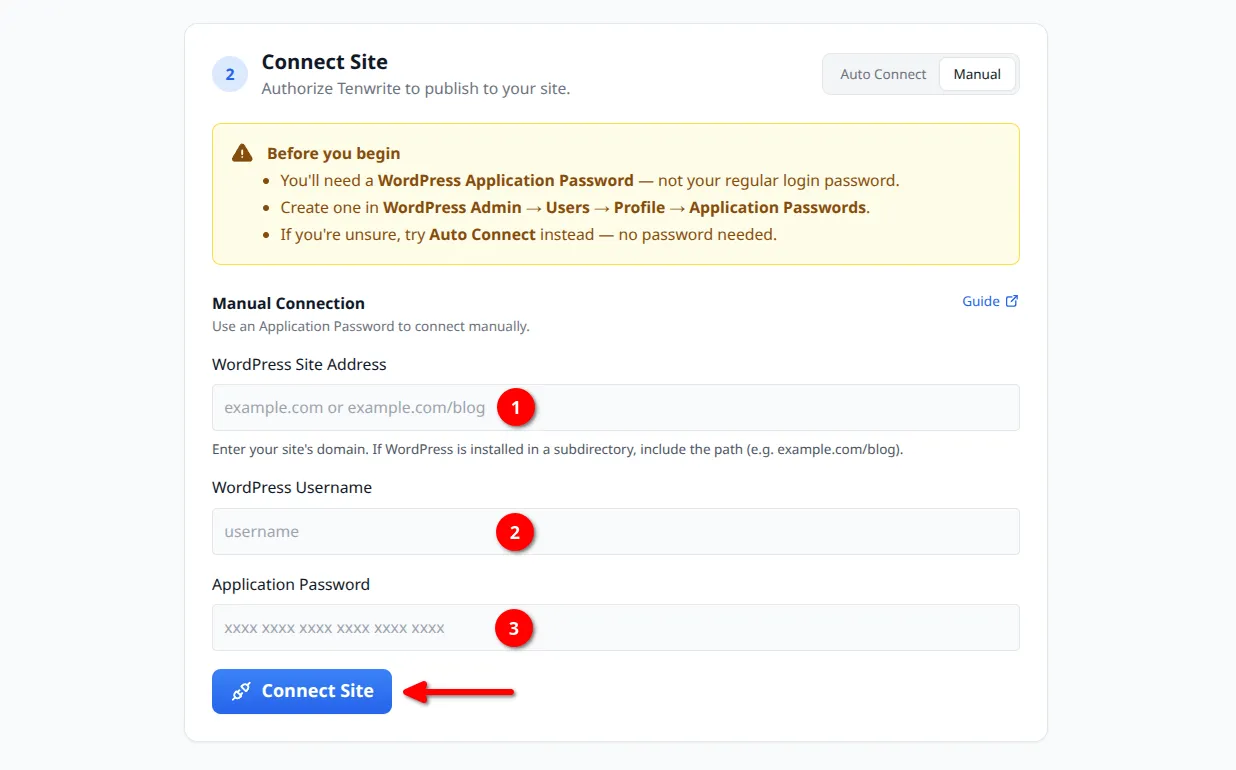
- Click Connect Site.
Troubleshooting
Section titled “Troubleshooting””Application Passwords” section is missing in WordPress
Section titled “”Application Passwords” section is missing in WordPress”- Ensure you are running WordPress 5.6+.
- Some security plugins disable this feature. Check settings in Wordfence, iThemes Security, or similar plugins.
- If you are on a multisite network, Application Passwords might need to be enabled at the network level.
Connection Failed / API Error
Section titled “Connection Failed / API Error”- Wordfence: Go to Wordfence > Login Security > Settings and ensure “Disable XML-RPC” authentication includes Application Passwords support if available, or whitelist our service.
- iThemes Security: Navigate to Security > Settings > WordPress Tweaks and ensure “Disable XML-RPC” is not enabled.
- Basic Auth: Some server configurations (Apache/Nginx) require additional configuration to support the Basic Auth header used by Application Passwords.
Unable to Detect WordPress Site
Section titled “Unable to Detect WordPress Site”If Tenwrite cannot detect your WordPress installation:
- Verify your site URL is correct and publicly accessible.
- Check if your site has the WordPress REST API enabled (visit
your-site.com/wp-json/in a browser - you should see JSON data). - Some security plugins or server configurations might block the REST API. Check your plugin settings.
- If using a firewall (like Cloudflare), ensure it’s not blocking API requests.
Custom Admin URL
Section titled “Custom Admin URL”If your WordPress admin is not at the default /wp-admin/ path (e.g., changed by a security plugin):
- The REST API at
/wp-json/should still work at the root of your site. - Auto Connect uses the standard WordPress Application Password authorization endpoint, which should work regardless of custom admin paths.
- If Auto Connect fails, use the Manual Connect method instead.
Authorization Endpoint Blocked (404 Error)
Section titled “Authorization Endpoint Blocked (404 Error)”Some security plugins or themes may block the WordPress authorization endpoint even though WordPress reports it as available:
- Symptoms: Auto Connect fails with a 404 error, or Tenwrite detects the endpoint is blocked.
- Common Causes: Security plugins (Wordfence, iThemes, All In One WP Security), custom login plugins (LoginPress, WPS Hide Login), aggressive caching, or theme restrictions.
- Solution: Use the Manual Connect method instead. This bypasses the authorization endpoint and uses Application Passwords directly.
- To fix permanently: Check your security/login plugin settings and ensure
/wp-admin/authorize-application.phpis not blocked or hidden.
Still having issues?
Section titled “Still having issues?”If you can’t get connected, email support@tenwrite.com with your site URL and a brief description of what’s happening — we’ll help you sort it out.
Tenwrite is an independent product not affiliated with or endorsed by Google LLC, Blogger, or WordPress Foundation. Google Docs, Gmail, Google Workspace are trademarks of Google LLC. WordPress is a trademark of the WordPress Foundation.