
Blogger - Sheet Automation
Sheet Automation turns a Google Sheet into a publishing queue. Each row becomes a Blogger post — you define the title, content, labels, status, and destination blog right in the spreadsheet, and Tenwrite handles the rest.
Because each row can target a different blog, a single sheet can manage content across all your Blogger blogs at once. This makes it particularly useful for bulk publishing and programmatic SEO.
How It Works
Section titled “How It Works”Tenwrite checks your sheet once every hour. New rows create new posts. Rows that have changed update the existing post. Rows that are unchanged are skipped. Rows missing required fields are skipped without error.
The maximum is 200 rows per sheet on Pro and 500 rows per sheet on Agency.
Set Up Your Sheet
Section titled “Set Up Your Sheet”Columns
Section titled “Columns”| Column | Required | Description |
|---|---|---|
| SITE | Yes | Blogger blog URL, e.g. example.blogspot.com |
| TITLE | Yes | Post title |
| CONTENT | One of these two | Post body — Markdown is supported |
| GOOGLE DOC | One of these two | URL of a Google Doc to use as the post body |
| LABELS | No | Comma-separated labels: tech, tutorial |
| STATUS | No | LIVE, DRAFT, or SCHEDULED |
| PUBLISH DATE | No | YYYY-MM-DD HH:MM — required if STATUS is SCHEDULED |
| READER COMMENTS | No | ALLOW, DONT_ALLOW_SHOW_EXISTING, or DONT_ALLOW_HIDE_EXISTING |
| FORMATTING | No | balanced or full |
| PRESET | No | balanced or a saved preset name |
Every row needs SITE, TITLE, and at least one of CONTENT or GOOGLE DOC. Use CONTENT for short posts written directly in the sheet. Use GOOGLE DOC for long-form content that lives in Google Docs.
Sharing a Google Doc with Tenwrite
Section titled “Sharing a Google Doc with Tenwrite”If you’re using the GOOGLE DOC column, the referenced document needs to be readable by Tenwrite. There are two ways to do this:
Option A — Share with the service account:
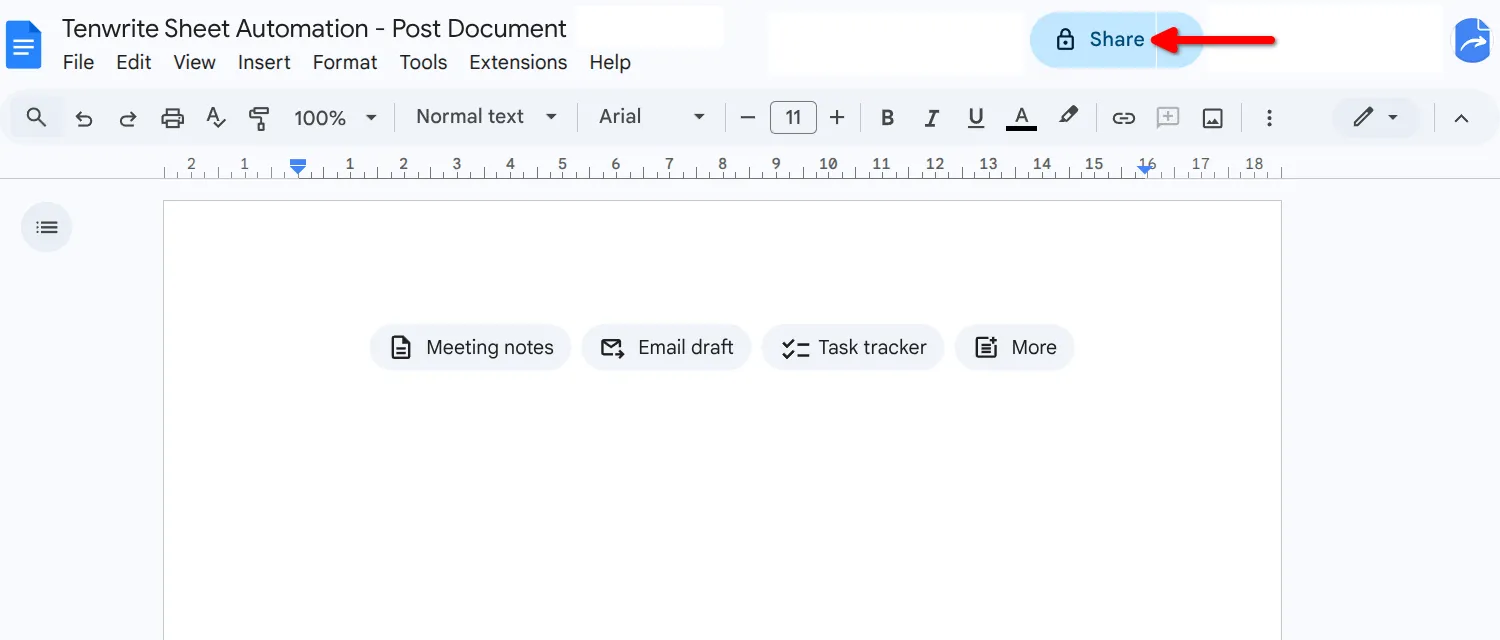
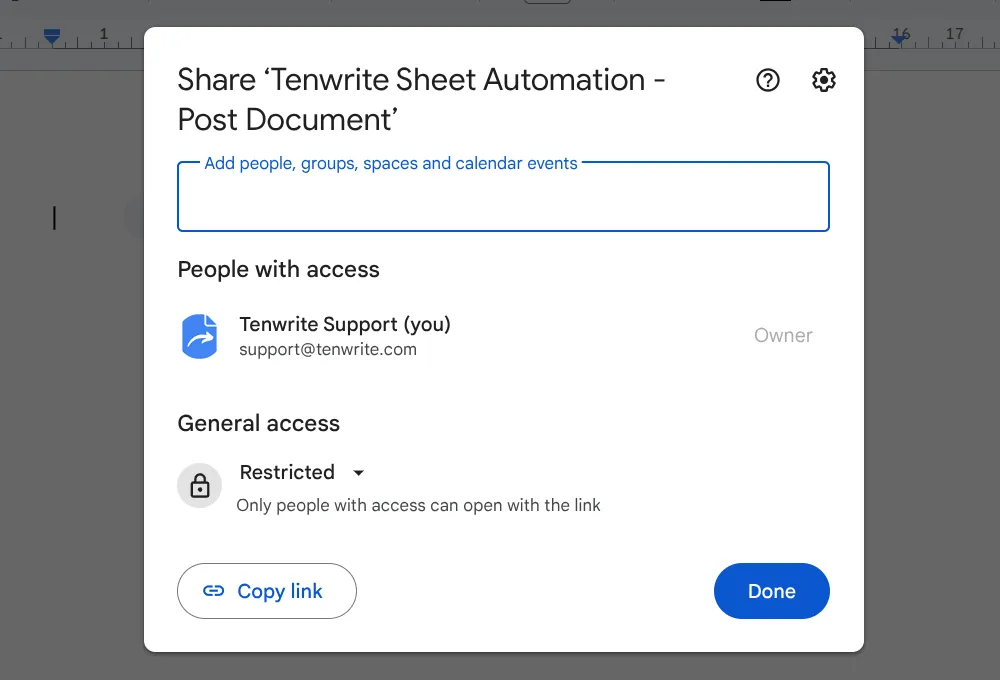
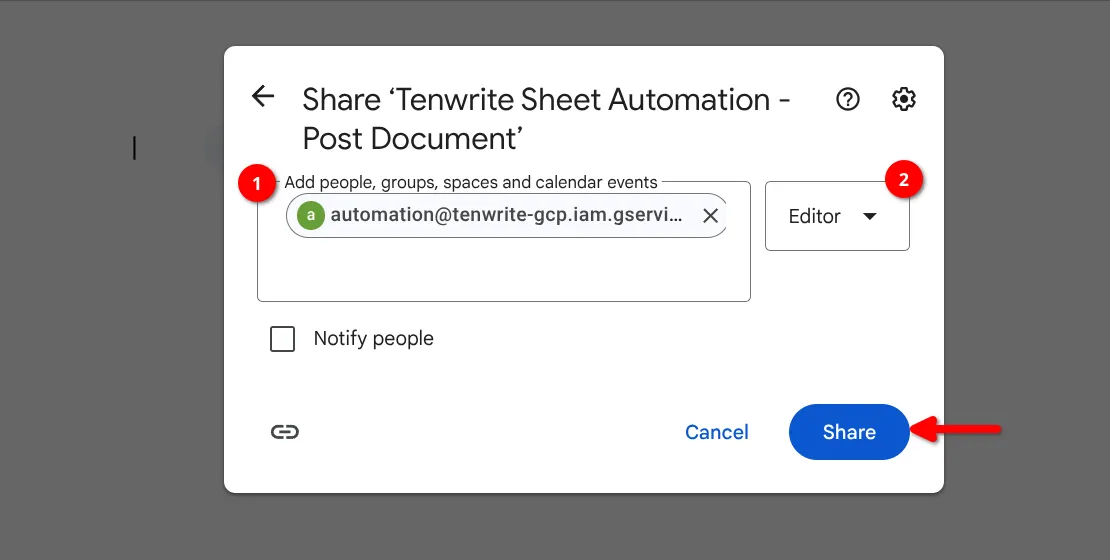
Open the Google Doc, click Share, and add automation@tenwrite-gcp.iam.gserviceaccount.com as a Viewer. Click Share anyway if prompted.
Option B — Make the doc public:
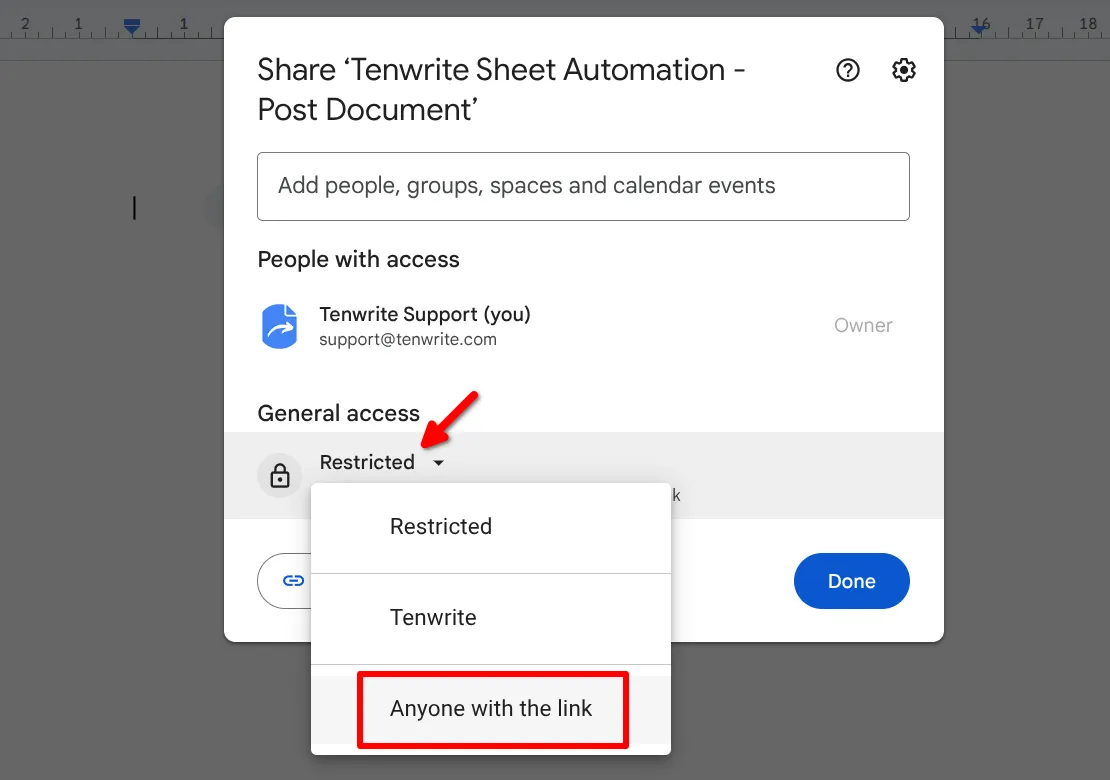
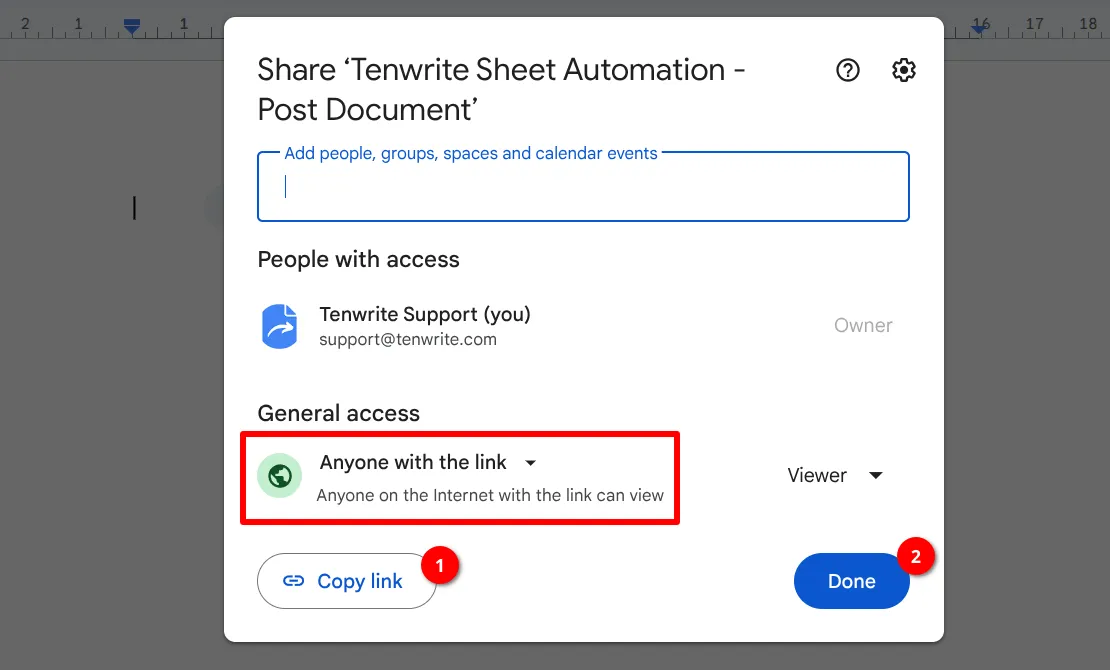
In the Share dialog, change General access to Anyone with the link (Viewer) and click Done.
Create the Automation
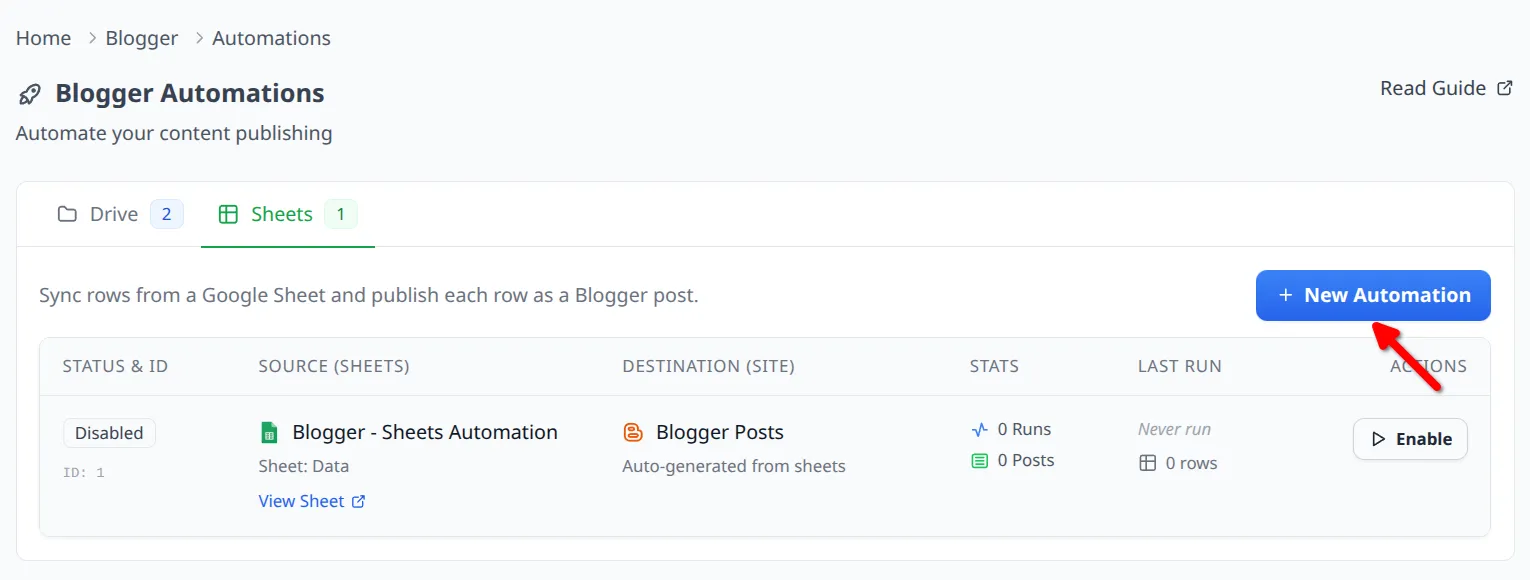
Section titled “Create the Automation”Open the Tenwrite add-on or Web Dashboard, go to Blogger > Automations, and switch to the Sheets tab.
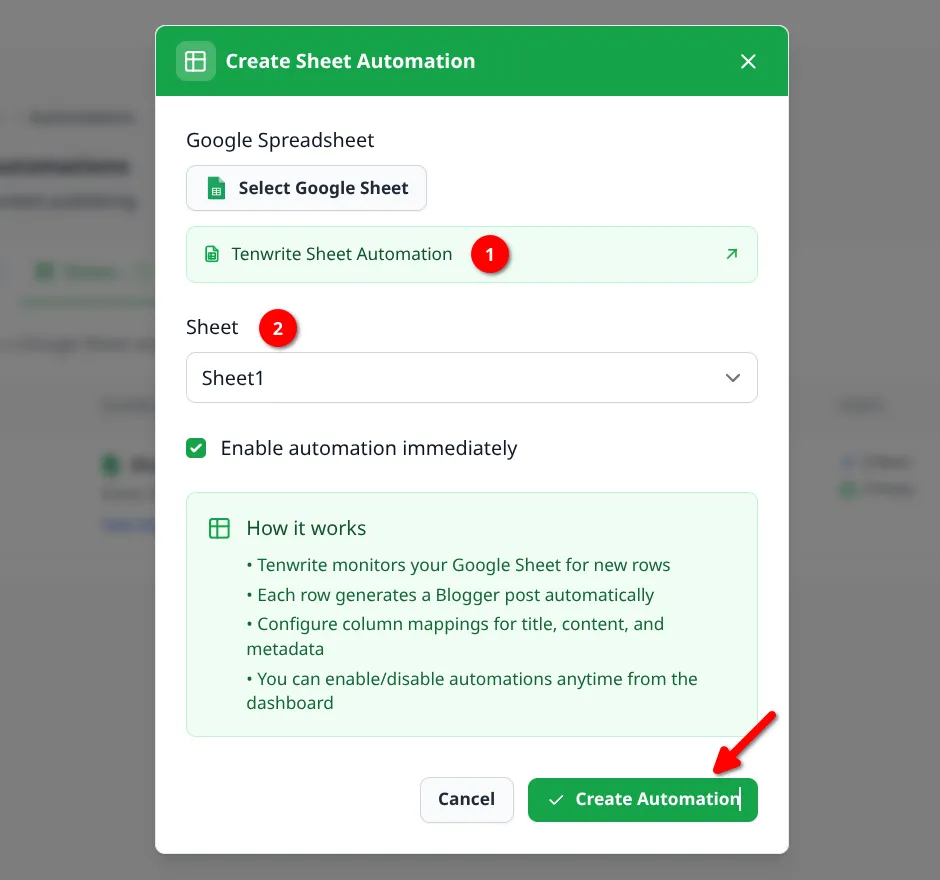
Click New Automation (or Create Sheet Automation if none exist). The create form opens.
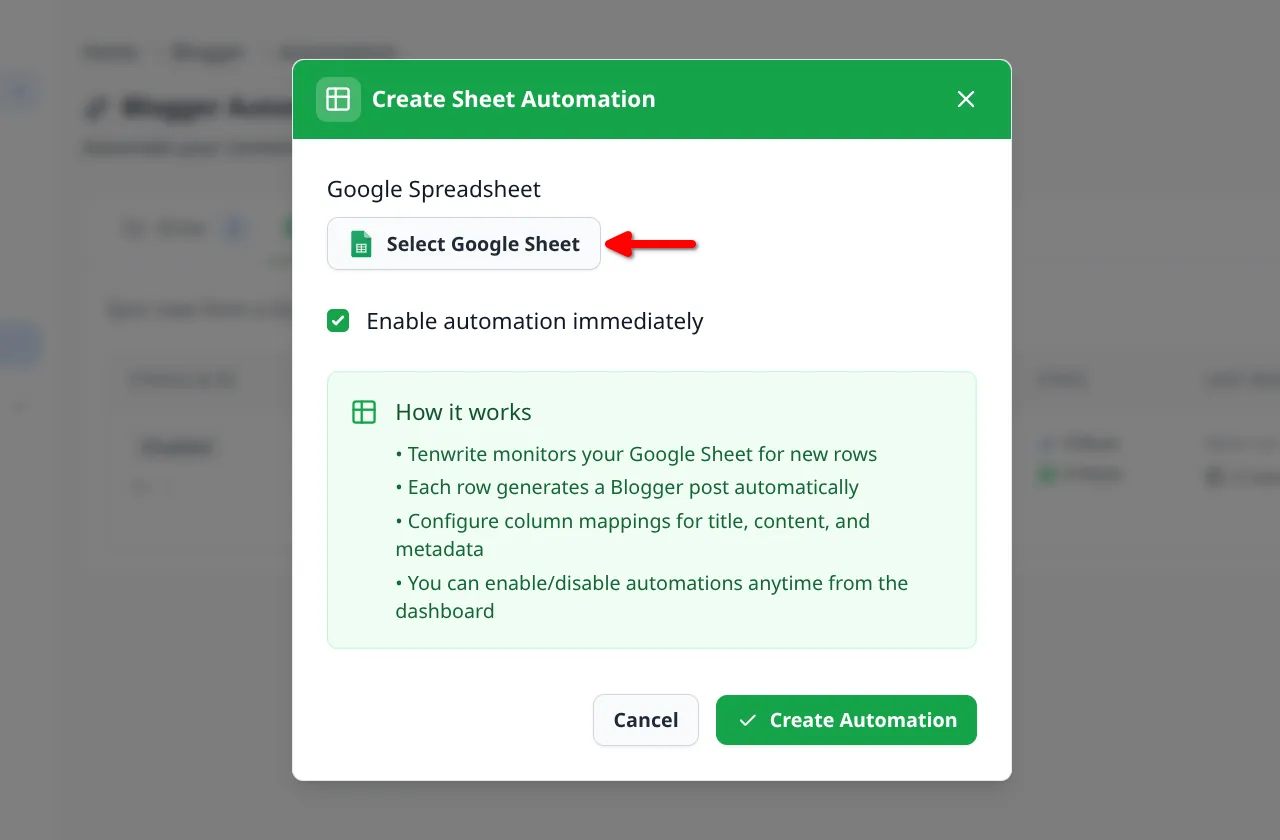
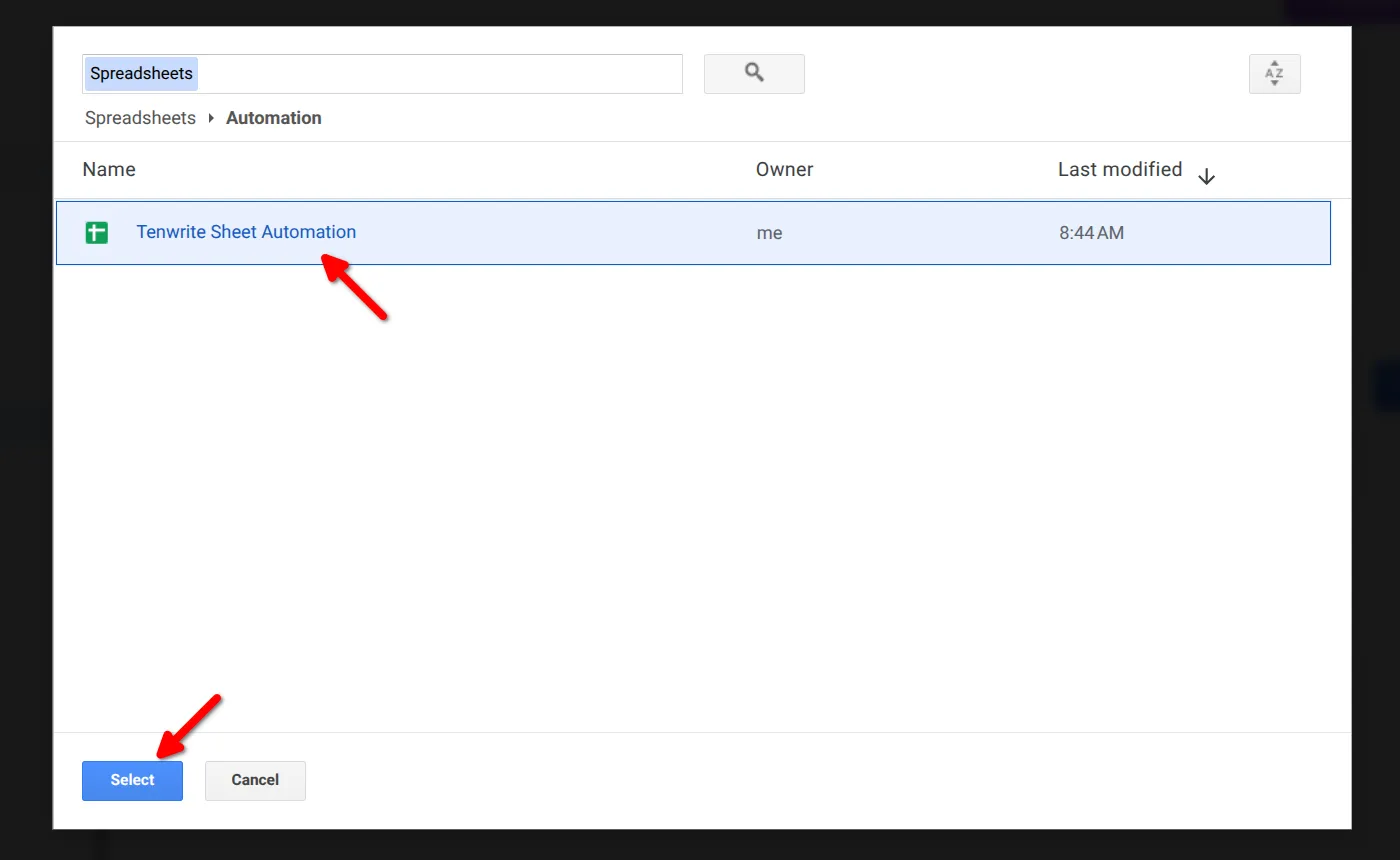
Click Select Google Sheet, choose your spreadsheet from the picker, and select the tab that contains your data.
Check Enable Automation Immediately if you want it to start on the next hourly run, then click Create Automation.
Tracking every Automation Run
Section titled “Tracking every Automation Run”When the automation processes your sheet, Tenwrite adds and manages two result columns on the selected tab:
- TENWRITE STATUS shows the latest Blogger state that Tenwrite confirmed for the post.
- TENWRITE LOGS records what Tenwrite did, when it happened, and whether the row needs attention.
These are output columns. You keep working in columns such as TITLE, CONTENT, GOOGLE DOC, and STATUS; Tenwrite writes the result columns for you.
STATUS and TENWRITE STATUS serve different purposes.
- STATUS tells Tenwrite what you want when it creates or updates the row, such as
LIVE,DRAFT, orSCHEDULED. - TENWRITE STATUS tells you what Tenwrite most recently confirmed in Blogger.
For example, a row can keep SCHEDULED in STATUS while TENWRITE STATUS changes from SCHEDULED to PUBLISHED after the scheduled time. Do not type into, rename, or delete the Tenwrite-managed columns.
What TENWRITE STATUS Means
Section titled “What TENWRITE STATUS Means”| Status | Meaning |
|---|---|
| DRAFT | The post is saved in Blogger but is not live. |
| SCHEDULED | Blogger is set to publish it at a future date and time. |
| PUBLISHED | The post is live. |
| TRASHED | The post has been moved to Blogger’s trash and may still be recoverable. |
| MISSING | Tenwrite can no longer find the linked post in Blogger. It may have been deleted. |
| NOT EXPORTED | The row is not linked to a Blogger post because one has not been created yet. |
The cells are color-coded to make large sheets easier to scan: published posts are green, scheduled posts are blue, and trashed or missing posts are red. The written label is always the final meaning, so you do not need to rely on color alone.
Read TENWRITE LOGS
Section titled “Read TENWRITE LOGS”Each log line includes a date and time, an action, and a simple explanation. Times use your account or spreadsheet time zone when available, with UTC as the fallback. The newest entry appears at the bottom.
| Log action | What happened |
|---|---|
| EXPORTED | Tenwrite created the Blogger post for the first time. |
| SYNCED | Tenwrite updated the Blogger post already linked to the row. |
| SKIPPED | Tenwrite intentionally did not create or update the row. Read the message for why. |
| EXPORT FAILED | Tenwrite could not create the post. The message explains what you should check. |
| SYNC FAILED | Tenwrite could not update the existing post. The message explains what went wrong. |
| STATUS INITIALIZED | Tenwrite checked Blogger and filled in the row’s current status for the first time. |
| STATUS CHANGED | Blogger now reports a different state from the last one Tenwrite confirmed. |
The cell keeps the latest 10 Tenwrite entries so a busy sheet stays readable. If older entries have been removed, the first line says so. Open Automations > View Last Run for fuller run details and errors.
When the Status Is Refreshed
Section titled “When the Status Is Refreshed”- A new, updated, or newly tracked row receives its confirmed status during an automation run.
- A
SCHEDULEDrow is checked on later hourly runs so it can change toPUBLISHEDafter Blogger publishes it. - A
TRASHEDorMISSINGrow is checked on the next few eligible runs, then no more than once a day. If you restore the post, Tenwrite can detect that and update the row. - Other rows show the latest state Tenwrite confirmed while processing them. A change made directly in Blogger may not appear until Tenwrite processes that row again.
- A temporary Blogger or connection problem does not automatically change a row to
MISSING; Tenwrite keeps the last confirmed state instead.
You can sort or move existing rows without losing their Tenwrite tracking. If you clear every editable input cell from a row, Tenwrite clears its managed status and logs after confirming that the row is still empty. To create a separate post, add a fresh row rather than copying a fully processed row.
Managing Automations
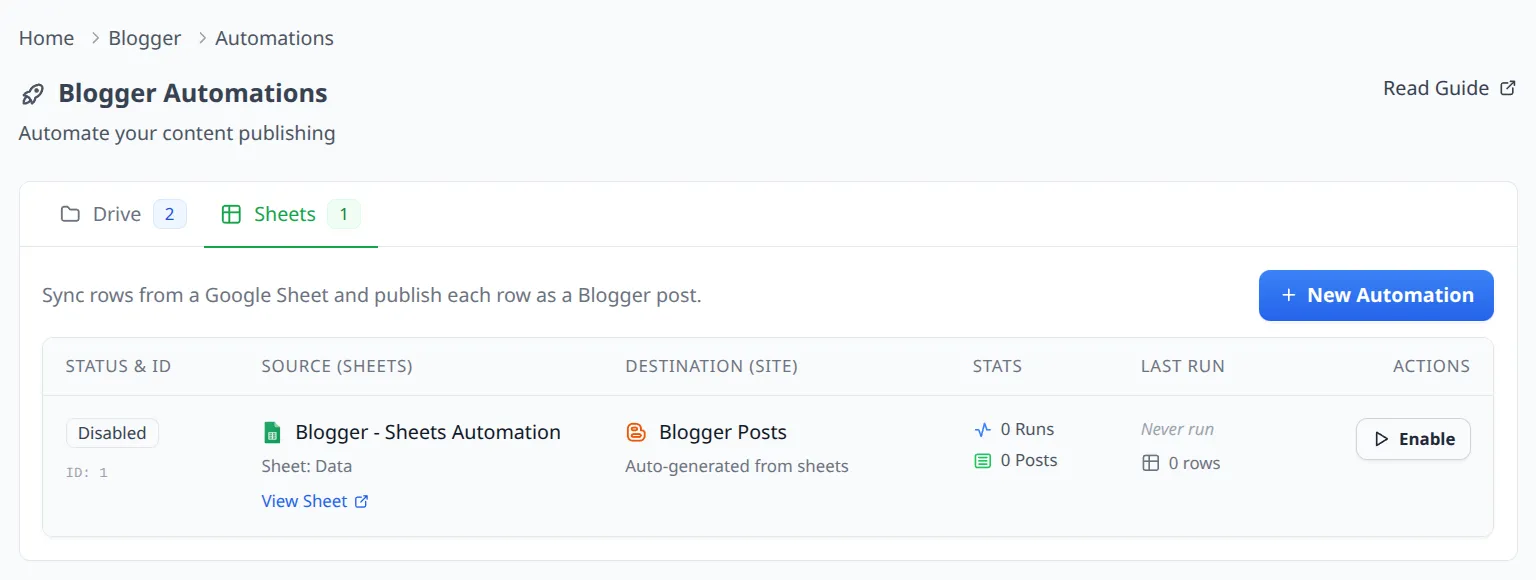
Section titled “Managing Automations”The Sheets tab lists all your automations with run stats — total runs, posts created, rows processed, failures — and when each last ran. Use the action button in each row to pause or resume.
Example
Section titled “Example”| SITE | TITLE | CONTENT | LABELS |
|---|---|---|---|
| shop.blogspot.com | Red T-Shirt | Comfortable 100% cotton tee… | products, clothing |
| events.blogspot.com | Concert Friday | Doors open at 8pm… | events, music |
| tech.blogspot.com | App Review: Notion | We’ve been using Notion for… | tech, reviews |
Each row targets a different blog. Tenwrite processes all three in the same hourly run.
Troubleshooting
Section titled “Troubleshooting”Posts aren’t being created
Section titled “Posts aren’t being created”- Column names are case-sensitive —
SITE,TITLE,CONTENT,GOOGLE DOCmust match exactly. - Every row needs
SITE,TITLE, and at least one content column. - If using
GOOGLE DOC, make sure the doc is shared with the service account or set to public. - Confirm the automation is enabled and the Blogger blogs are connected.
STATUS values aren’t working
Section titled “STATUS values aren’t working”- Use exactly
LIVE,DRAFT, orSCHEDULED— all uppercase. - For scheduled posts, also set
PUBLISH DATEto a future date inYYYY-MM-DD HH:MMformat.
The sheet values are not showing in Blogger
Section titled “The sheet values are not showing in Blogger”- If a doc has a Frontmatter table, it overrides the corresponding sheet columns. This is intentional — the doc’s own metadata takes priority.
Related Guides
Section titled “Related Guides”Need help? Contact support@tenwrite.com.
Tenwrite is an independent product not affiliated with or endorsed by Google LLC, Blogger, or WordPress Foundation. Google Docs, Gmail, Google Workspace are trademarks of Google LLC. WordPress is a trademark of the WordPress Foundation.